
November 02, 2026
The Parking Lot Problem
You know how you get a song stuck in your head? I’ve got one that pops up every time I drive by a parking lot that is devoid of trees. The song is by Joni Mitchell from 1970, Big Yellow Taxi.
“They paved paradise, put up a parking lot…. They took all the trees and put ‘em in a tree museum and they charged the people a dollar and a half just to see ‘em. ”
Parking lots are a necessary evil. But do they have to be so ugly?
Having spent the last 40 years in Florida, I am used to more robust parking lot landscape regulations. Although the landscape regulations vary by local ordinance, here are the goals of Florida’s parking requirements.
- Break up large expanses of pavement
- Reduce heat and provide shade for parked cars
- Interrupt long rows of parking
- Buffer parking lots from adjacent properties and streets
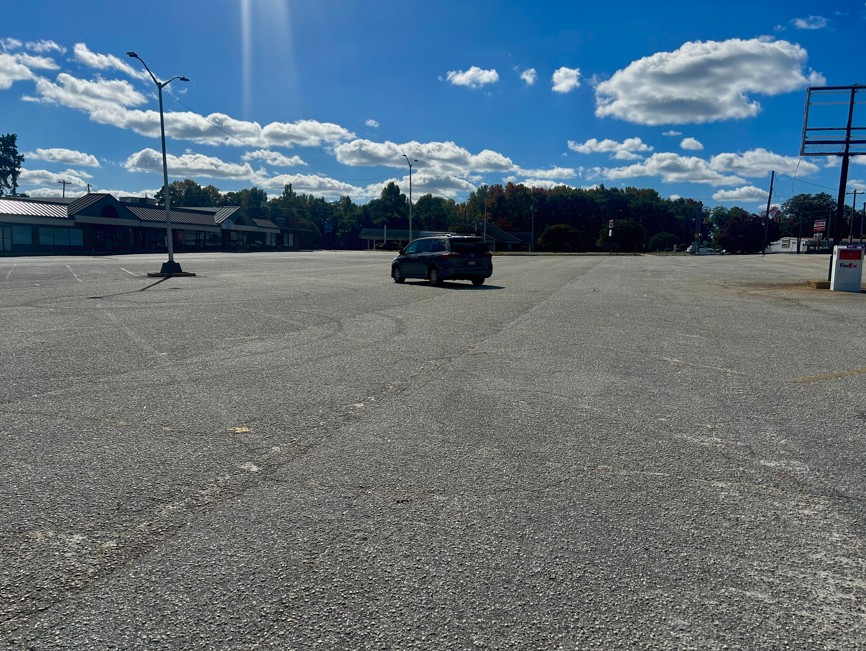
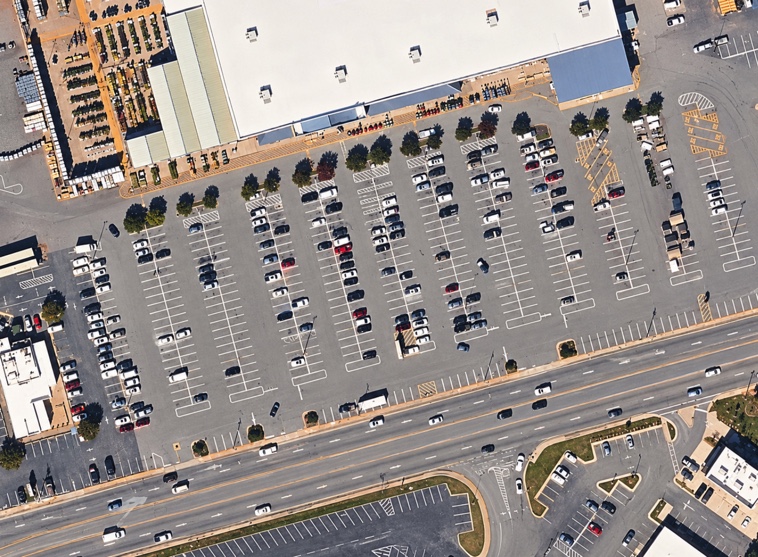
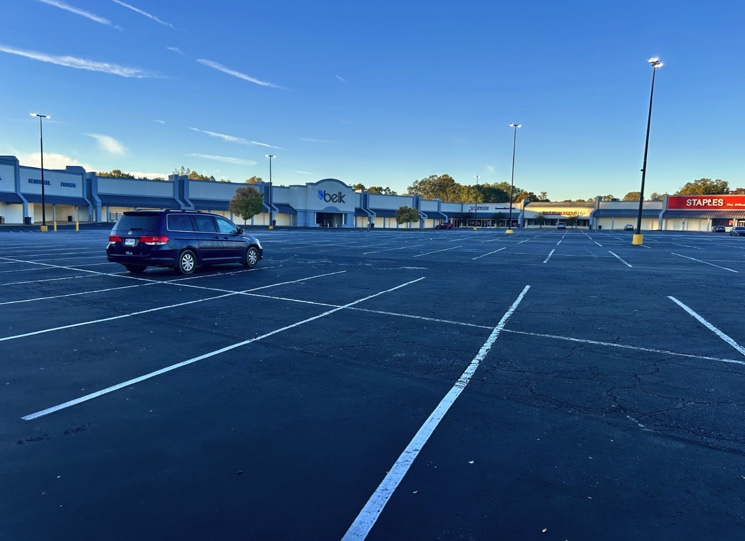
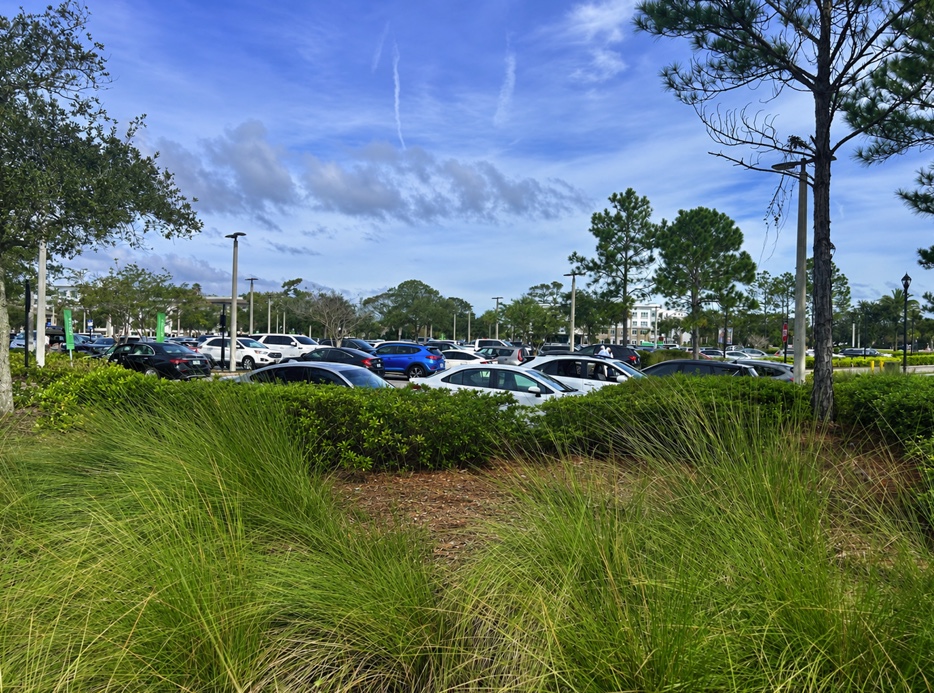
Clearly, the parking lots in these photos did very little of the above. Can you imagine how hot an uninterrupted sea of black asphalt will get on a hot summer day?
Here are some highlights from one Florida city’s landscaping code.
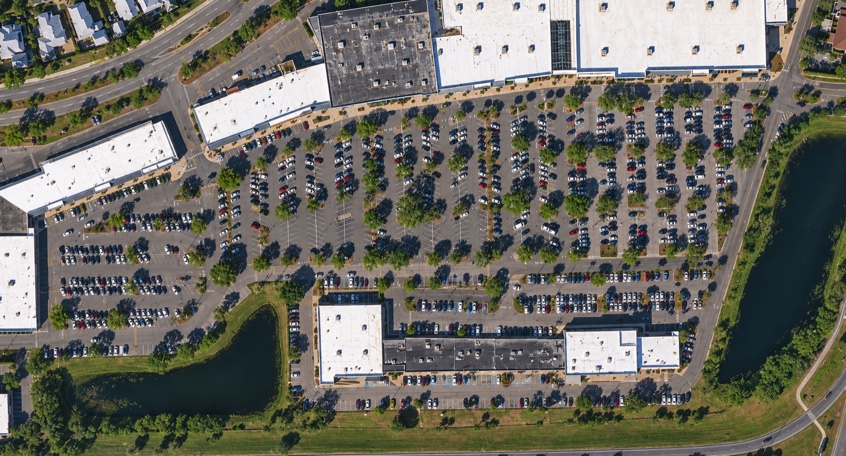
- Terminate every row of parking with a landscape island
- Add a landscape island for every 100’ of parking or roughly every ten spaces
- Island must be at least 8’ wide by 17’ long (15’ for compact car space)
- Each island to include a tree
- Provide at least one tree per 4,000 square feet of vehicle-use area.
- 50% of all required trees must be a shade tree
- It takes three palm trees to be the equivalent of a shade tree
As I have been driving around taking pictures of parking lots, I can tell you that the trees really do make a difference. One particularly picturesque parking lot caught my attention because of the variety of trees.
I saw crepe myrtles, a great summer-blooming ornamental tree. The downside of this tree is it loses its leaves in winter and can rain flowers onto the cars below. I saw magnolia and live oak trees which are considered evergreen trees because the new leaves push off the old leaves keeping the parking lot green for a majority of the year.
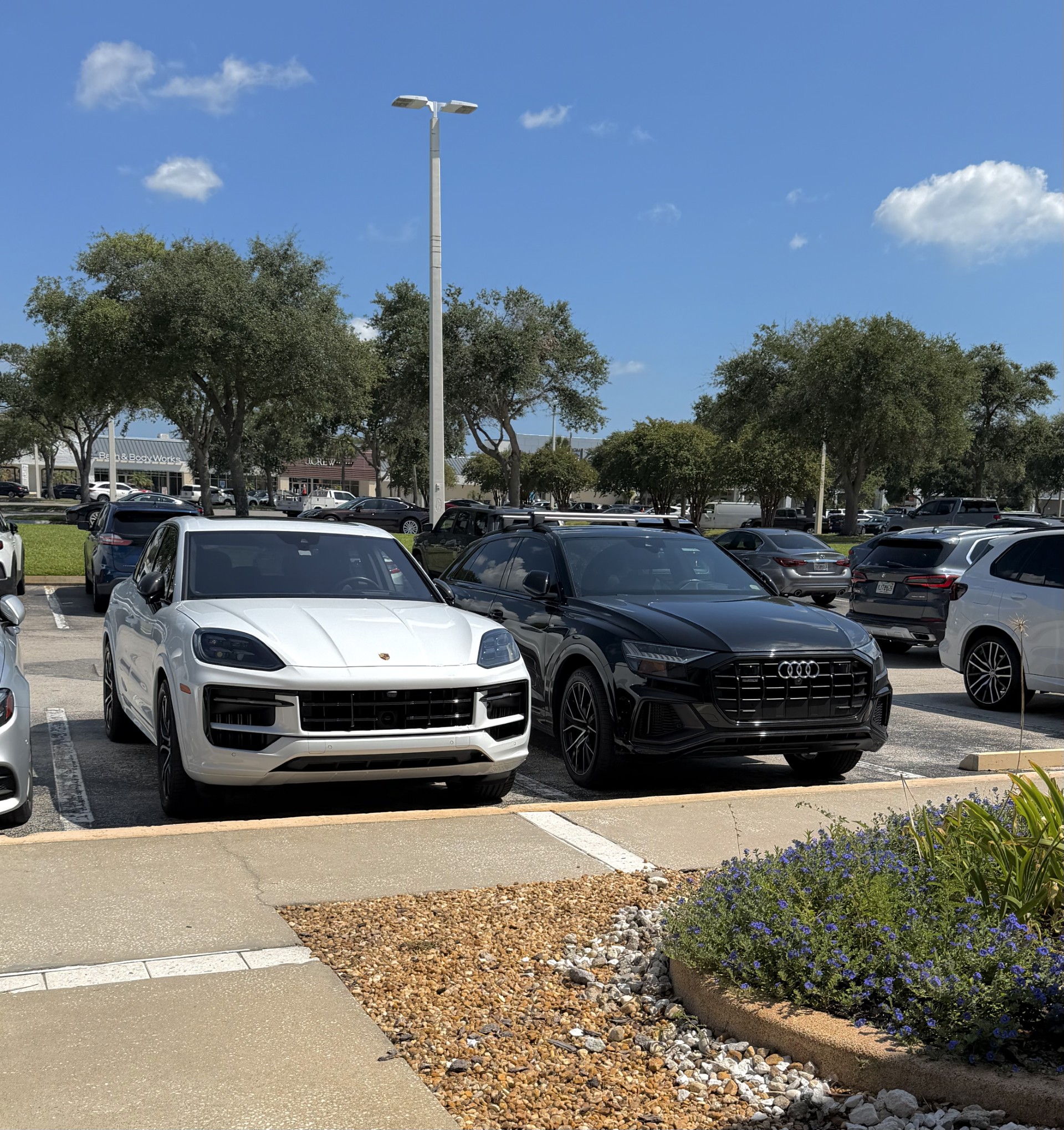
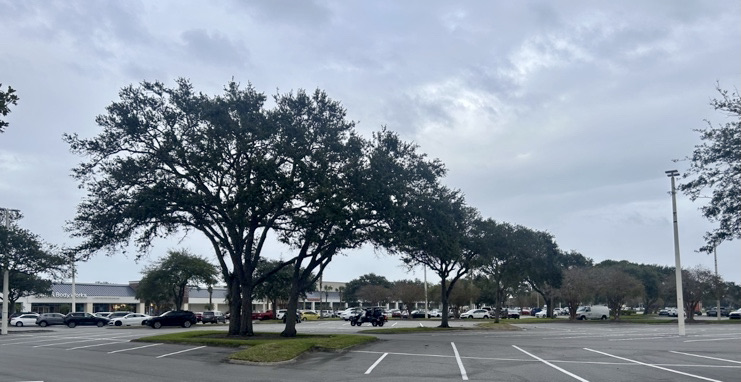
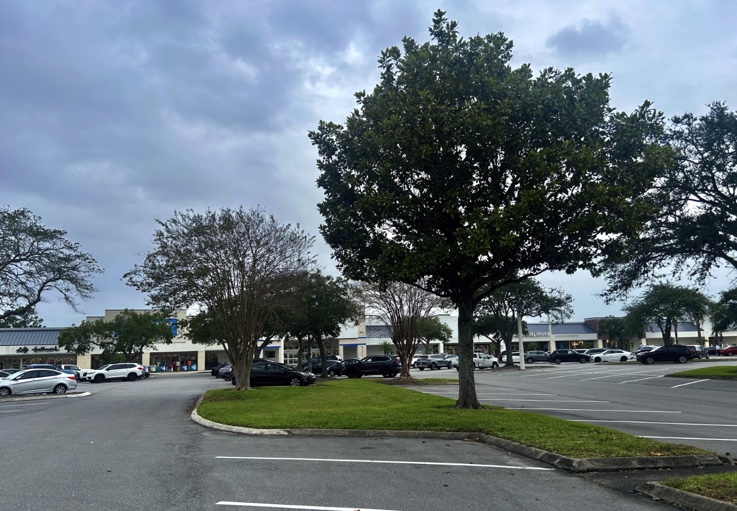
Both trees can be messy, so maintaining the parking lot is essential.
Another parking lot I visited (yes, I am a geek) had primarily palm trees throughout the parking area. As these palm trees mature, they grow taller, often providing even less useful shade for the cars and the pavement below. On a hot summer day, there was no shade to be had.
Meeting the landscaping requirements is only the beginning. Selecting the right trees is equally important. After all, a tree that provides wonderful shade might also drop berries, nuts, sap, or other unwelcome surprises onto the cars below.
While including trees in and around parking areas is great – not all trees are suited for parking areas near cars and pedestrians.
- Trees that drop fruit or berries
- Mulberry trees drop berries
- Black Cherry trees attract birds that drop you-know-what!
- Trees that drop nuts, acorns or seed pods
- Sweetgum trees drop hard, spiked seed pods
- Hickory and walnut trees drop hard nuts that could dent cars
- Sycamore trees dump exceptionally large leaves and seed pods
- Pine trees that drop needles, cones and sap on cars
Determining how many parking spaces to provide is always a balancing act. Developers want to minimize the amount of land devoted to parking, while tenants and customers rarely think there are enough spaces. Adding landscaped islands further complicates the equation because every island eliminates potential parking spaces. But should maximizing the number of parking spaces always take priority over creating a more attractive environment? Finding the right balance between parking spaces and landscaping isn’t easy. But somewhere in that equation, we need to consider the experience of the people using those parking lots.
Trees aren’t just decoration. They provide shade, reduce heat, soften the harsh appearance of asphalt, and make an otherwise unpleasant environment more inviting. Yes, they take up valuable space and add to construction and maintenance costs. But isn’t creating a more attractive and comfortable environment worth something?
Joni Mitchell warned us about paving paradise more than 50 years ago. Perhaps it’s time we reversed the process. We don’t have to eliminate the parking lot. We just need to put a little paradise back into it.
Categorized in: Uncategorized
This post was written by Housing Design Matters
 Privacy Policy