
April 20, 2026
(Another) Response to a Wall Street Journal Article
With rising costs of everything from land, labor, building materials, interest rates, and regulations, buyers (especially first-time buyers) are having a hard time finding houses they can afford. The American dream of home ownership is on life support.
Builders who make a living at selling houses are finding multiple ways to make houses more affordable in this challenging economic environment. Let’s call it American Dream triage.
But the builders’ efforts to make home ownership affordable are being condemned. “Builders are pinching pennies to maintain profits in a stagnant housing market – choosing lower-end fixtures and synthetics over natural materials” was the byline in a recent Wall Street Journal article.
Wait – I’m confused.
Shouldn’t builders try to make houses more affordable? Are we okay with letting first time home buyers being priced out of their dreams? Is making a profit in America suddenly evil? Have the expectations of buyers become too elevated compared to the past?
The article goes on to list many of the things builders are “skimping on.”
- Synthetics over natural materials
- Thinner granite counter tops
- No crown molding on cabinets
- Lower end appliances
- Fewer windows
- No towel bars or automatic garage door openers.
I’d like to put all of these skimps in perspective. Perhaps even a historical perspective.
Synthetics over natural materials
One of the “skimps” was a vinyl flooring over hardwood. My current home has vinyl plank flooring.
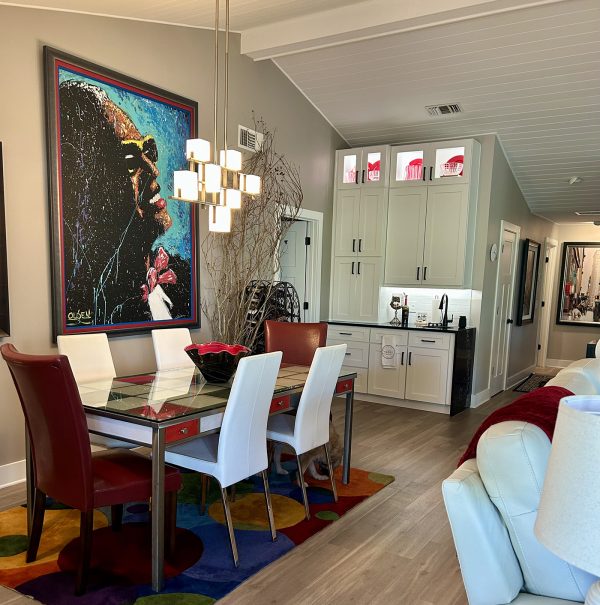
Everyone has their own preference, but I prefer it over hardwood. I consider it a resilient, low-maintenance flooring. We have dogs who occasionally slop water on the floor or have an accident – “puddles or piles” as HDM Partner Tom Devine has coined – also a long-time dog owner. My vinyl floor also doesn’t scratch under the dogs’ paws and doesn’t dent as easily as a hardwood floor – which is good news, so I don’t have police my guest’s high heels to make sure they aren’t missing the rubber end.
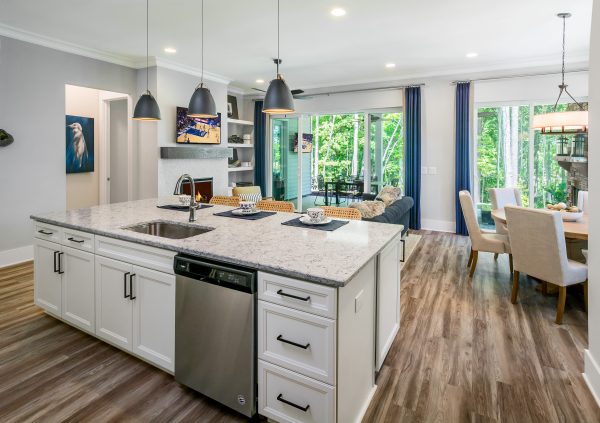
Synthetic cabinet doors instead of wood cabinet doors! I prefer a synthetic cabinet door because it is lower maintenance, easy to clean and doesn’t warp like wood. I once had espresso brown stained cabinets and found the stain wore off on high use cabinets like the pull out trash drawer.
I prefer vinyl clad windows over wood windows. We renovated a historic house in Charleston and were required to use single pane wood windows because they matched the original windows.
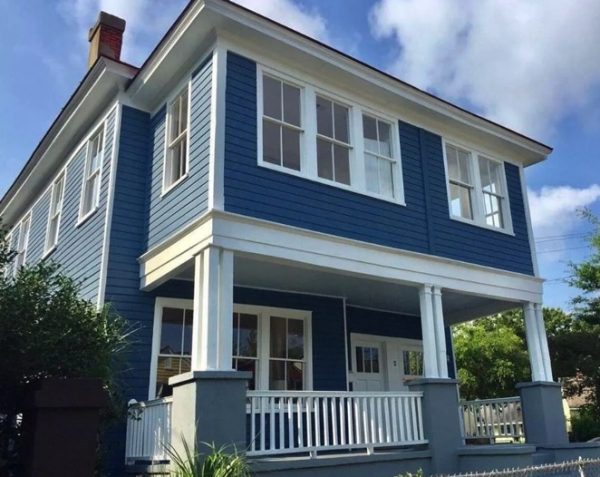
Those darn windows leaked with every northeastern wind and were constantly needed to be chalked as the wood shrank in the cold and swelled in the summer.
Thinner granite counter tops
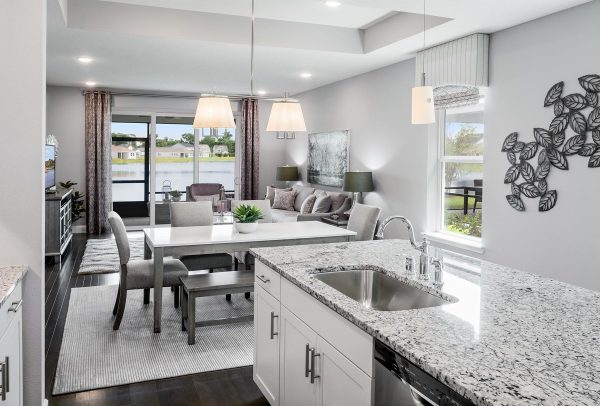
My first house purchased in the eighties had laminate counter tops. It had a faux granite pattern and we paid extra for the bull nosed edge so you didn’t see the seam along the edge of the counter. Laminate counter tops were subject to burn marks if a hot pan was accidentally placed on it. I would have thought I had won the lottery if I could have afforded granite – at any thickness.
No crown molding on cabinets
Not everyone wants crown molding. Some prefer the clean lines for a more sleek, modern look. However, builders could make crown molding an option so it can be selected for those who want it?
Lower End Appliances
Back in the nineties, there was an “on-your-lot” builder in the Tampa area who didn’t include any appliances as standard. Indeed, this builder was willing to provide a partial finished home to keep cost down. This allowed the home buyer to “DIY” the final build out. They definitely serviced the lower end of the market, I wonder if the Wall Street Journal would paint them as the villain today?
Fewer Windows
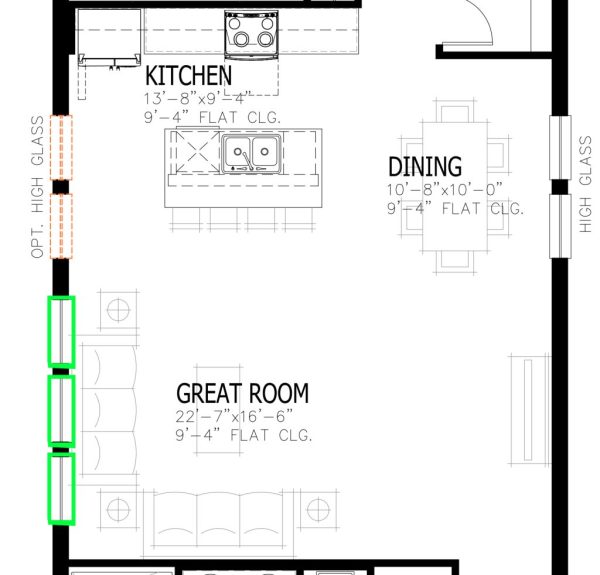
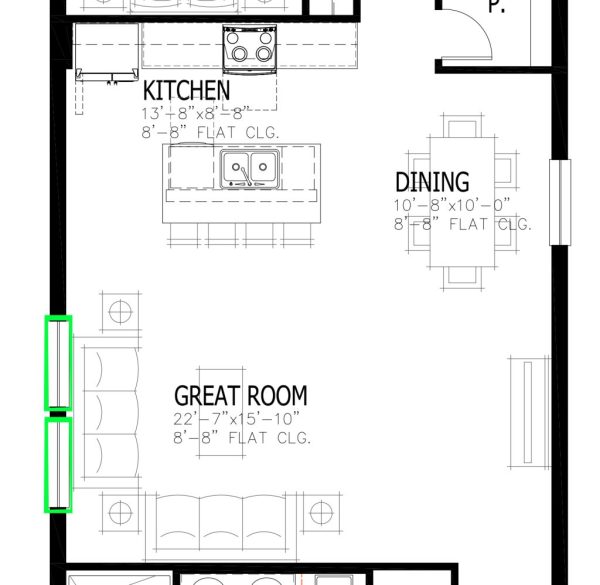
I love windows. Every designer loves windows. But they are expensive. One of my “fewer window strategies” includes larger windows to reduce the quantity but maintain the natural light. Fewer windows also lowers the energy consumption of the home.
No Towel Bar
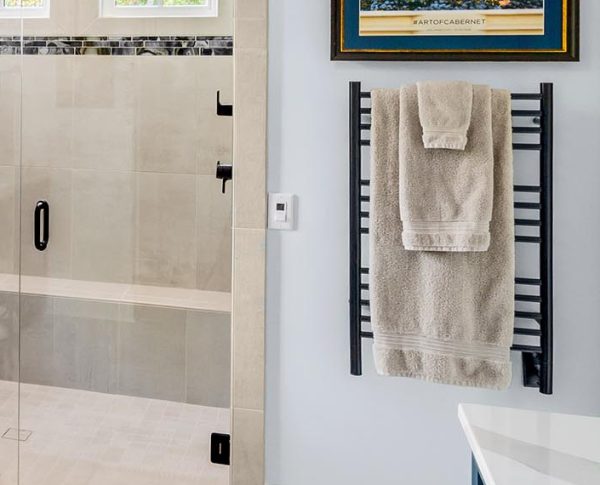
Towel bars are an easy DIY project. Why not let the homeowner select and install their own towel bars if it lowers the cost of the home? We never find we have enough towel bars so we have installed them ourselves.
Automatic Garage Door Openers
Not to make this about me but I currently live in a townhome without a garage!
The house I grew up in didn’t have an automatic garage door. It was a single panel 16’ wide, garage door. As a kid I could open and close the door by myself. However, if we accidentally left the door open when it rained, it would get rained soaked and too heavy for one person to open. Yes – I love an automatic garage door – but there was a time when houses didn’t have them.
Historical Perspective
Let’s put the American Dream into historical perspective with the houses of Levittown from 1947 to 1951 in Long Island NY, Levittown PA from 1952 to 1958 and lastly Levittown NJ from 1958 to 1963. The initial houses were between 750 to 1,000 sq. ft, 2 bedrooms and one bath. They were slab on grade so there was no basement, but they did have an unfinished attic space. Over time, they grew to around 1,200 to 1,600 sq. ft. and some of the later models even had a one car garage. The compact kitchen did indeed have laminate countertops. Early floor finishes included dark brown asphalt tile with later upgrades including linoleum and vinyl tile.
The bottom line is you can absolutely have more windows, nicer counter tops, and towel bars (okay you really should have the latter), but how much more are you willing to spend to get them? What are you willing to sacrifice for them? The housing market is definitely struggling with affordability. Yes, is the American Dream on life support. It’s a much bigger conversation than home builders. But the American media is scapegoating the builders who are trying to make homes as affordable as possible with very little help from the other players on the field. Perhaps they need to do their homework on truly low cost housing.
Sorry if this was a bit of a rant. We do a great deal of work in the affordable side of housing and I am passionate that efficient floor plans and cost effective construction can become a spatial place for a family to call home. Let’s work together to keep this dream alive!
Categorized in: Uncategorized
This post was written by Housing Design Matters
 Privacy Policy