
September 21, 2026
Is Wood-Look Tile a Viable Option for Your Exteriors?
If you love the warm look of wood, but hate how it weathers, this may be a fun exterior material to explore.
Porcelain wood-look tile has been around for some time now. I’ve got it in my kitchen and dining room. And because it is porcelain, the tile flows out to my outdoor living area. So, I get both the look of wood and the durability of tile. A win/win if you ask me.
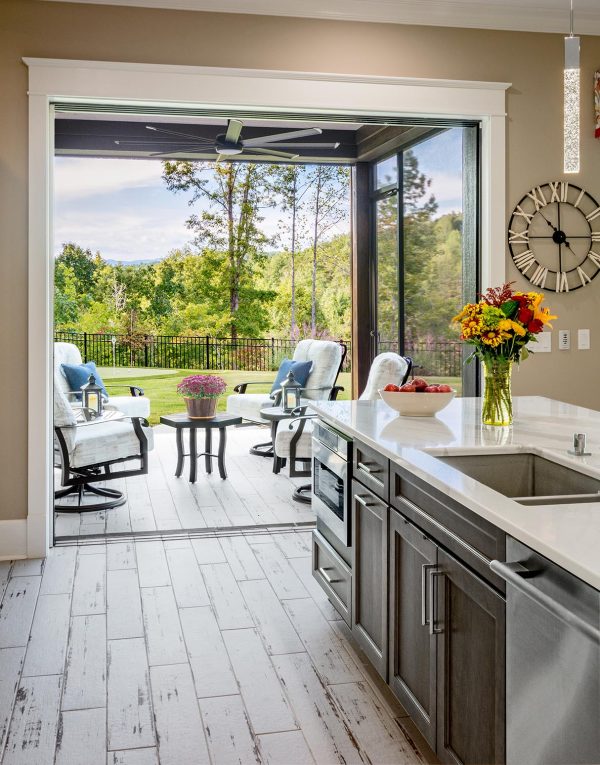
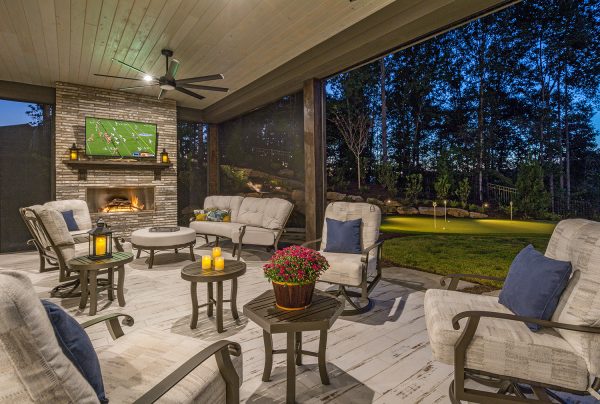
Recently, we have seen this trend go viral (and vertical) with porcelain tile being applied to walls as exterior cladding. Absolutely brilliant. Adding the warmth of wood to a modern elevation is a great strategy to avoid an overly harsh look.
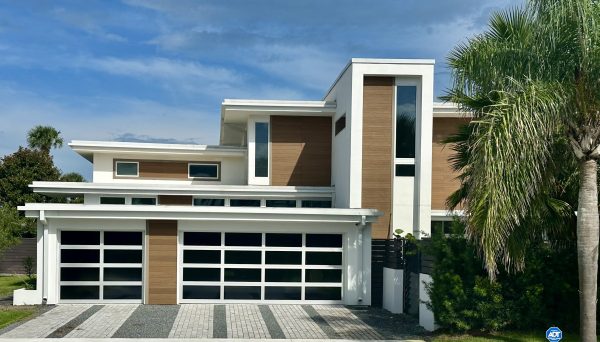
A quick Google image search reveals a whole host of design solutions. Here you will see tile used on walls in both a horizontal and vertical orientation.
Admittedly, most of these images are various shades of brown – but there are a few warm gray examples as well. In a recent search of porcelain tile, I fell in love with this stunning wood-grained tile with hints of teals (at least that’s how it looks on my computer screen).
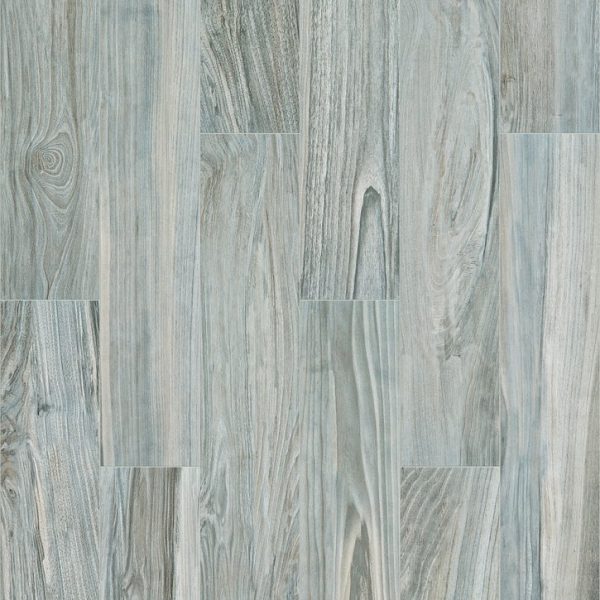
It’s called Manhattan by Shaw Floors and comes in 8” by 40” lengths. As you may know, I am a fan of color!
Ah – but why stop at wood-look tile? The St. Jude Dream Home in Tulsa, OK, used a creamy white porcelain tile creating the high degree of contrast we talked about in last week’s blog.
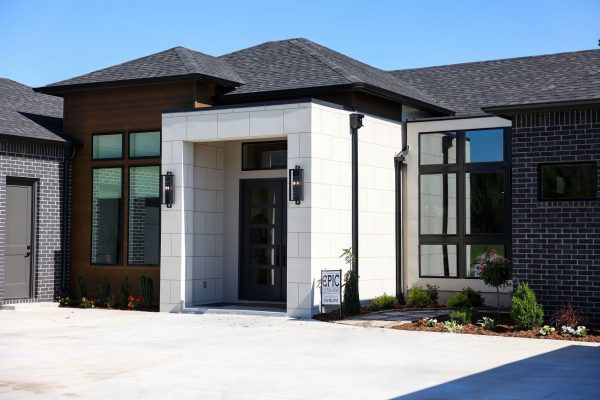
Since this is a glazed porcelain tile, it should be easier to keep clean and less prone to staining and mildew than many porous, creamy-white stone products. Brilliant.
You may have also seen exterior tile on commercial applications. One popular hamburger chain sports the tile on the exterior. Another example is a bank where the wood tile contrasts a creamy white stone.

Okay, enough with the pretty pictures. How is it applied? Turns out there are some critical application techniques needed that I learned from my friends at Shaw Floors:
- It is important to use a mortar specifically rated for exterior applications and the expected environmental conditions, including freeze/thaw exposure where applicable.
- In high-wind zones like Florida, the installation may require additional engineering or mechanical attachment depending on the system, application, and local building-code requirements.
- Soft joints are recommended every so often to allow for expansion and contraction and an exterior grade grout is recommended.
- It requires a proper substrate preparation and under no circumstances is it recommended adhering tile to any vertical surface other than a Portland-cement-based product. That means you must not attempt to mount it directly on wood.
- Lastly, check local building codes as there may be a limit to the allowable height of the tile. This would be critical for multifamily building applications.
What do you think? Do you like these looks?
Have you used porcelain tile as a wall cladding? If so, send me some pictures. I’m curious how the price of the tile compares to other upgraded cladding material like stone.
Categorized in: Exterior Styles, Uncategorized
This post was written by Housing Design Matters
 Privacy Policy