

April 06, 2026
How Your Window Choices are Quietly Adding Cost
It seems like many builders are focused on ways to cut costs without hurting buyer appeal. One tried-and-tested strategy is to limit the skews with things like windows. A builder may have only two window sizes for the entire home. The theory is that with fewer skews, the builder gets better prices and deliveries on the windows. It also gives the builder more flexibility in moving windows from one house to another.
Of the two sizes, one window might be a 3’ by 5’ single hung window for bedrooms and living spaces. It is an egress window that works for both first and second floors and can be placed as a single or combined with another one or two windows. We frequently see one window in secondary bedrooms, two windows in the primary bedroom, and three windows in the great room. The windows are framed individually with 6” or 8” between them, depending on the type of construction.
But what if adding a window skew allowed the builder to use fewer windows and save money without sacrificing the look and feel of the home? For example, in the living area, two 4’ by 5’ windows could be used instead of three 3’ by 5’ windows.
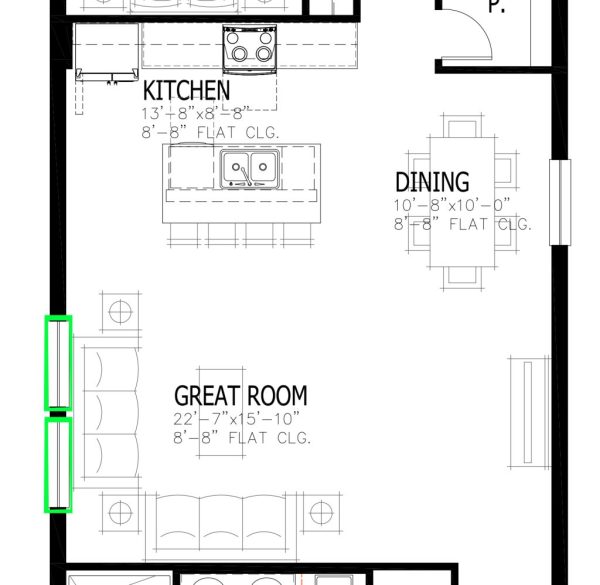
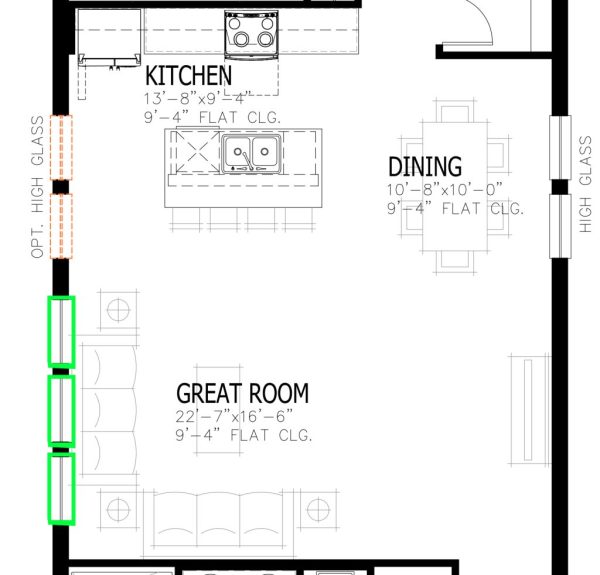
The two larger windows yield 40 sq. ft. of glass, while the three smaller windows yield 45 sq. ft. of glass. Some argue that having fewer structural mulls between the windows overcomes the slight reduction is glass area.
In most cases, the cost of two larger windows is less than the cost of three smaller windows. One needs to consider not only the cost of the windows, but also the labor and framing to install each window. Yes – it adds a skew and a bit more complexity, but lowers the overall cost of the project’s windows without a significant drop in natural light in the home. This is a preferred strategy over simply eliminating one of the 3’ windows in the living room or primary suite.
The next thing to consider is the shape of the room and where the windows are placed. If the window wall in the primary suite is the longer bed wall, then two 3’ wide windows work well on either side of the bed. I like at least 7’ between the windows for a king-size headboard to fit between them.
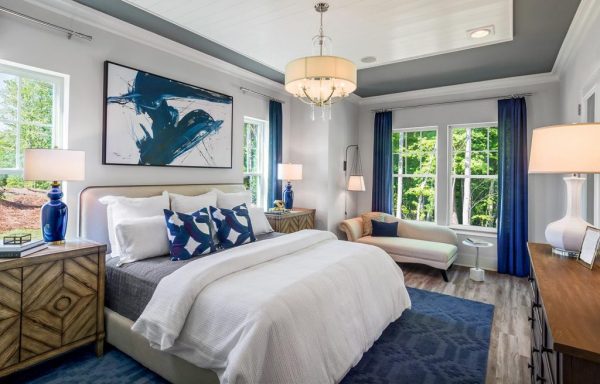
Sadly, I have seen homes where the second window was eliminated to keep costs down. This simply makes the room look dark, lopsided and like a mistake.
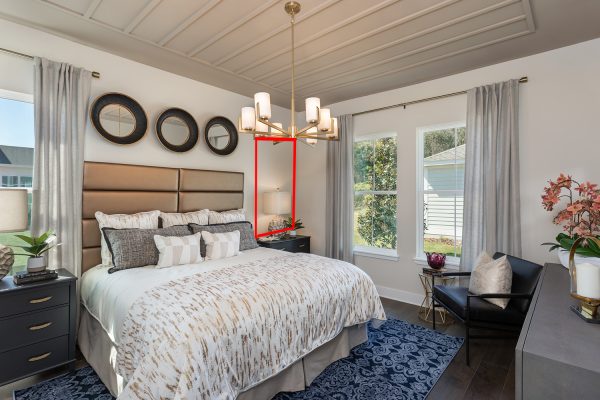
A better strategy would be to rotate the primary suite so the window wall is not on the bed wall. In the scenario, the windows are centered on the shorter wall. This would be a great opportunity to replace two 3’ wide windows with one 4’ wide window. The glass area drops from 30 sq. ft. to 20 s. ft. but it is far preferable than a single 3’ window on one side of the bed.
How Your “Quick Fix” Can Ruin Your Exterior
The same strategy can be applied to other aspects of design. I once designed a clubhouse with a very traditional elevation. It had three dormers equally spaced across the roof.
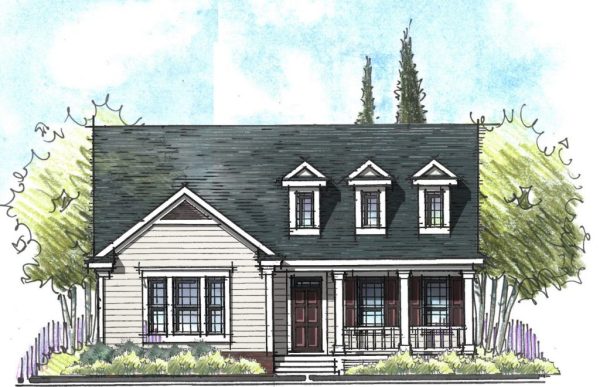
At some point, it was determined that it would be more cost effective with only two dormers. So the middle dormer was eliminated, making it look like a missing tooth.
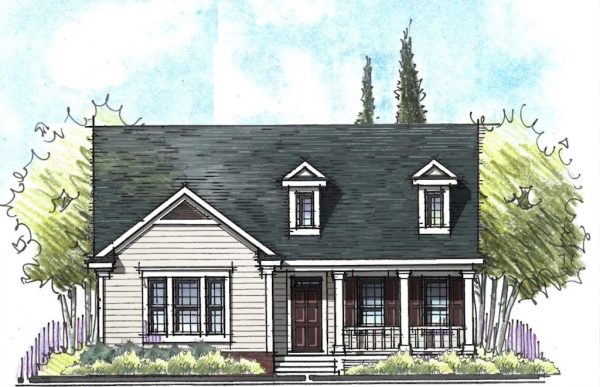
If we had to remove a dormer, the better strategy would have been to consider slightly larger dormers and then equally space them across the roof.
The Moral of the Story
In the case of the windows, more window skews could equal less money. Similar cost reductions would occur with the dormers. The key is to be proactive and engage purchasing early and often in the design process. Not after the fact when the architect isn’t looking.
Categorized in: Uncategorized
This post was written by Housing Design Matters
 Privacy Policy