

October 12, 2026
Where Does the Vacuum Go?
I welcome this question when clients review a floor plan with me. It tells me they are thinking about storage and its usability. My answer varies with the size of the home. A larger custom home might have a dedicated broom closet. In a smaller production home, my answer was often, “The linen closet. The upright vacuum occupies the floor space beneath the shelves.” That arrangement works when the closet is deep enough for the vacuum and there is sufficient clearance beneath the lowest shelf and the front of the shelf and the door. A 24” deep linen closet with 16” shelves is ideal.
But what about today? The question should now be, “Where do all the vacuums live and charge?” Beyond traditional upright and canister vacuums, we need to consider several other choices. So many of my friends and co-workers have more than one machine.
Central Vacuum
With a central vacuum system, strategically placed inlets provide access throughout the home. I love the automatic dustpan feature that lets you sweep debris into an inlet with a broom.

Be sure to locate one in the kitchen. Beyond that, I think these are useful in the primary bath to pick up hair. The collection canister is typically in the garage, keeping collected dust and debris outside the living space. This is better for those with allergies.
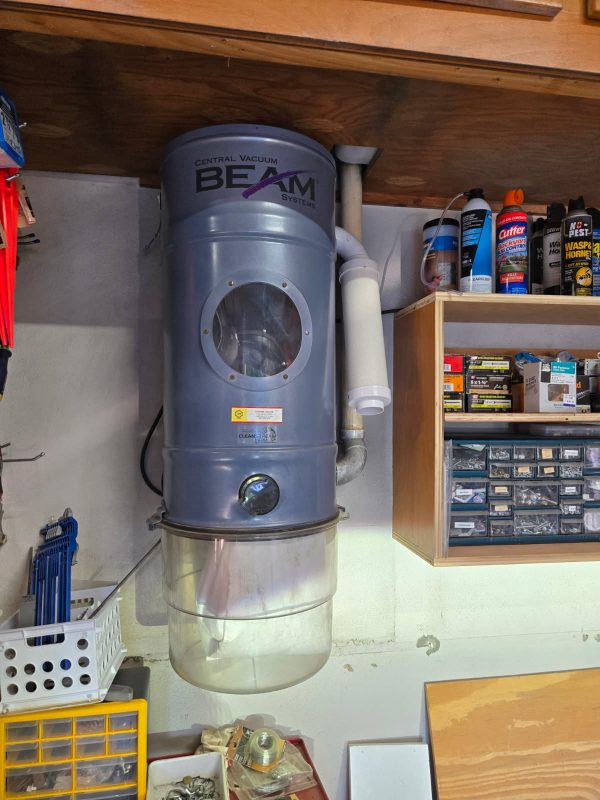
But wait! What about the hose and attachments? Where do they live? They can be bulky and cumbersome. I hear stories of buyers who abandoned their investment in central vac because dragging the hose around was too tiresome. At least a traditional upright has wheels to make moving from room to room easier.
New central vacuum systems have retractable pull-to-clean hoses that negate the need to coil, carry, and store the bulky hose.
Rechargeable Stick Vacuum
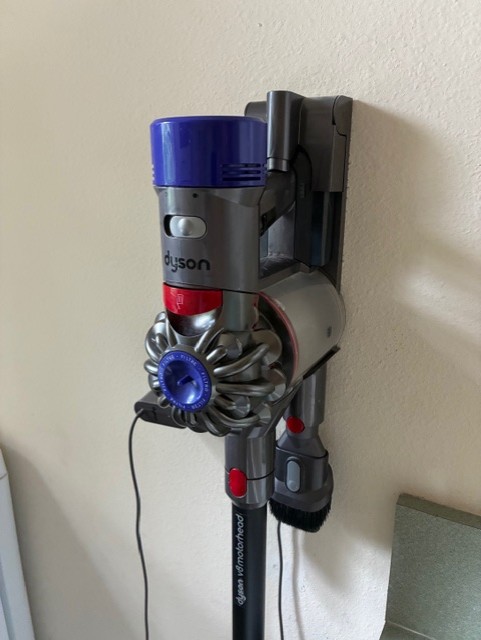
We have a lightweight rechargeable vacuum that hangs on the wall. It is great for quick cleanups, like the dark brown hair on the light-colored bathroom floor. I can’t imagine whose hair that is (my husband is bald). It’s charging needs were an afterthought during electrical design: there is no convenient outlet where we keep it. Fortunately, ours has two battery packs, so one can charge elsewhere while the other is in the vacuum.
Small Rechargeable Handheld Vacuum
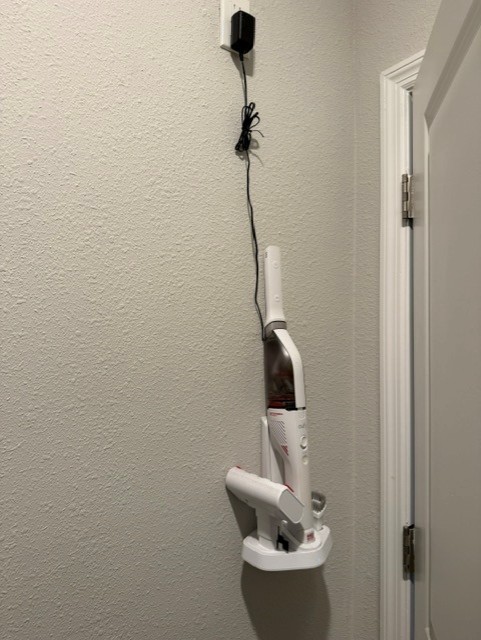
These are handy, especially for families with kids and pets. I like including outlets in the walk-in pantry for charging these and other handheld gadgets.
They are also helpful for cleaning the family car: dirt from kids’ shoes and wayward French fries. If there is a golfer in the family, those silly shoes collect grass clippings and save them for the car floor. The same can be said for clay court tennis players. A garage outlet provides a convenient place to charge a handheld vacuum.
Robot Vacuum
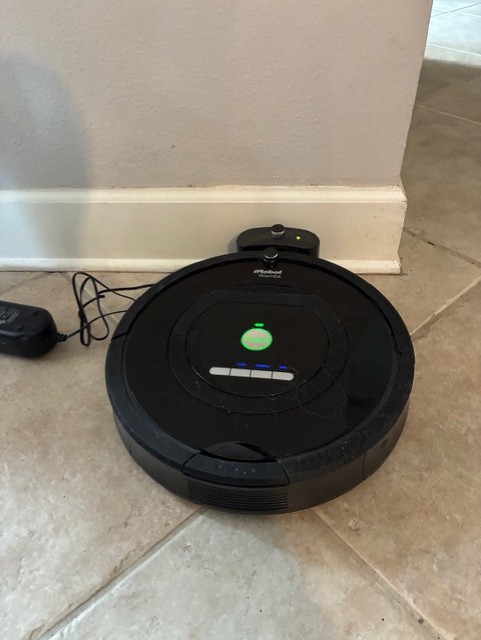
This one can be harder to plan for. A conveniently located outlet supplies power to the charging dock, but the robot also needs a clear path to leave and return. Then there is the question of whether buyers want to see it when it is not in use. A closed closet traps it. An open bay under a cabinet could conceal it, but must provide the docking clearance the model requires and access for emptying debris, refilling water tanks on mopping models, and servicing the unit.
As a production builder, you need to accommodate a variety of storage and charging needs. Even if you offer central vac, buyers may also use rechargeable or robot vacuums. Their equipment may change over time.
I know. This is not the sexiest subject in home design. But no one wants to live with dirt, and making cleaning easier is compelling. Show buyers where they can conveniently store and charge their vacuum of choice. That small detail communicates thoughtfulness.
Categorized in: Uncategorized
This post was written by Housing Design Matters
 Privacy Policy