

April 27, 2026
What’s Eating Into Your Backyard?
Many of my readers are familiar with the term NIMBY or Not In My Back Yard. It refers to homeowners who become provincial about what should or should not be built near their home.
I have found new meaning for this phase. Not In My Backyard – because the back is too small to do anything.
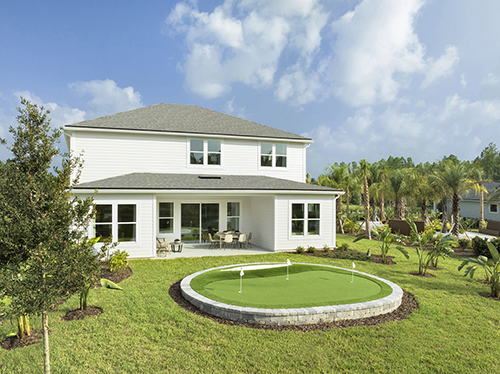
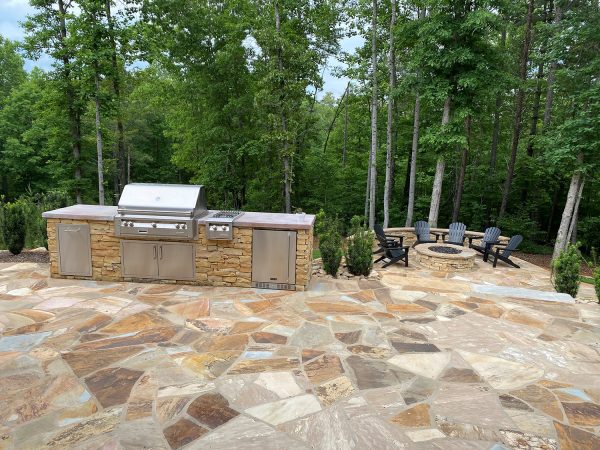
Backyards can include a variety of features:
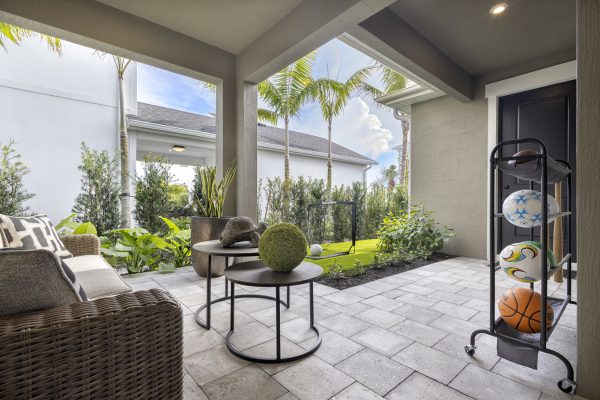
- Patio with chairs
- Kid’s swing set, sand box, or jungle gym
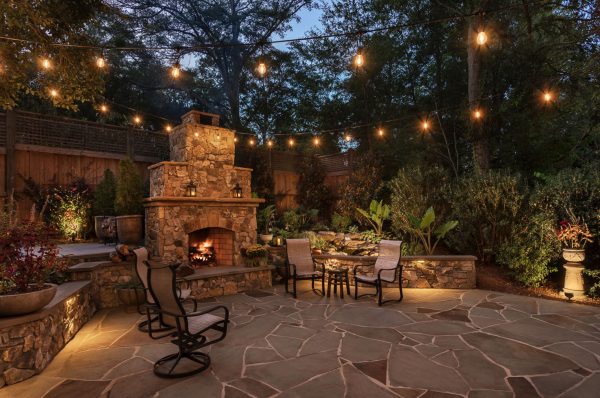
- Fire pit

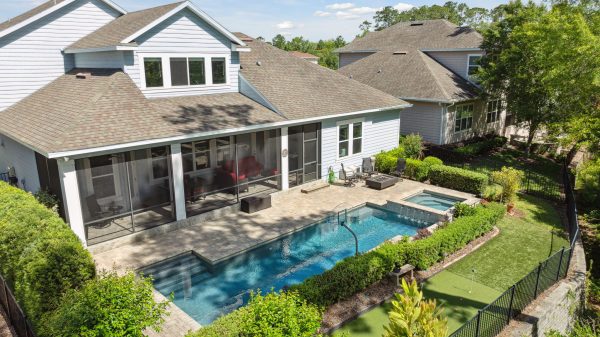
- Pool and/or spa

- Koi Pond
- Putting green
- BBQ grill
- Culinary garden

- And any combination of the above!
Backyards are a unique opportunity for buyers to customize their private outdoor space. But there are two streets surrounding my new neighborhood that have painfully small backyards. These yards are so small that nothing from the aforementioned list is possible.
It is a sad tale when the land plan and the houses aren’t fully compatible. Here is a list of the issues that create no backyard.
- A street that ends in a large cul-de-sac
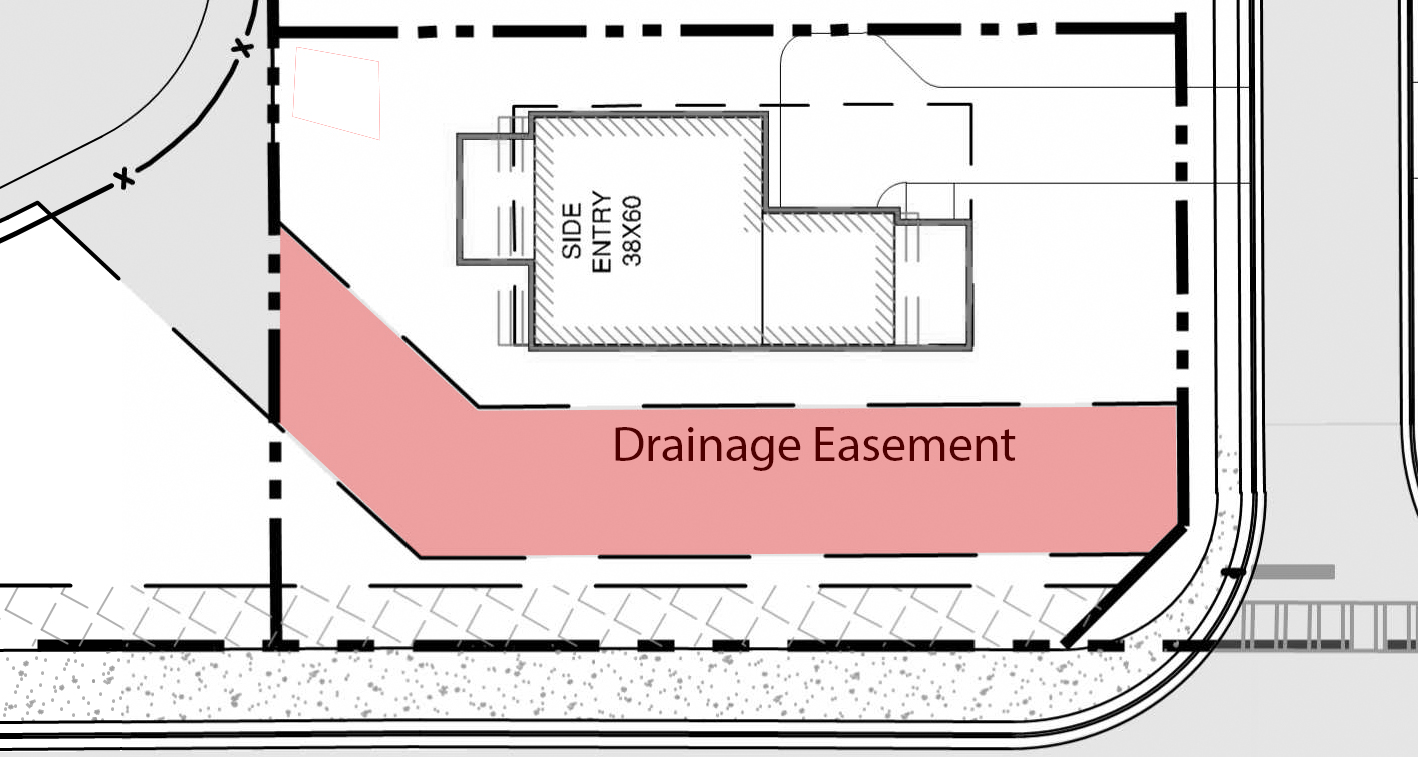
- An easement that encroaches into the buildable envelope
- Pie shaped and irregular lots
- An option that makes the plan deeper
Cul-de-sac lots
Often, the lots at the end of a dead-end street become the most sought-after. There is less traffic at the end of the street so kids can ride their bikes in the cul-de-sac with less worry. These sought-after suburban lots tend to carry a higher premium even though the front of the lot is shorted by the curve of the road. Higher premium lots are often bought by the family who not only can afford the more expensive lot, but also the biggest house. This results in the biggest house on the smallest lot. Ouch.
Easements
What looks like a big lot may be totally gobbled up by easements. The easement may be hidden from view, like a drainage or an underground utility easement.
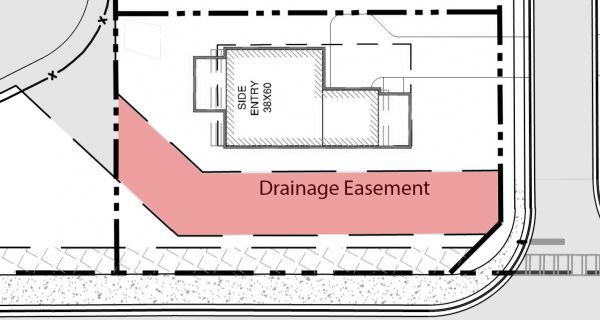
Some may be an easement for an adjacent lake or retention pond. Eager buyers snap up what looks to be a large lot during an initial offering of lots, only to find out later the lot is not as big as it seems.
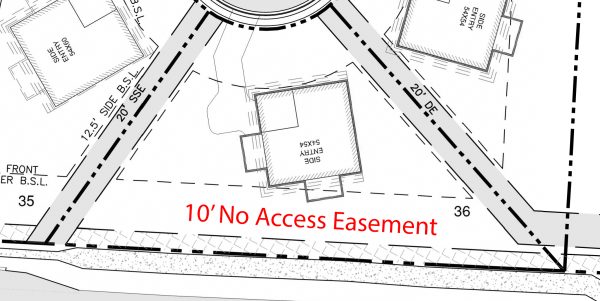
Pie Shaped and Irregular Lots
Once again, it looks like a big lot, but because it is so narrow in the front, not all plans in the collection will fit. You see this often with curves in the road and the above-mentioned cul-de-sac.
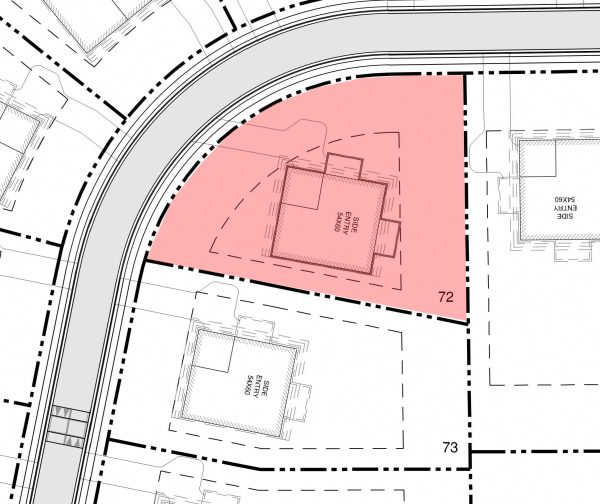
But we have also seen it in developments with a form-based code. Here, the land plan is deliberately altered to be more organic and less geometric. This approach wreaks havoc with the builder’s portfolio of plans.
Troublesome Options and Upgrades
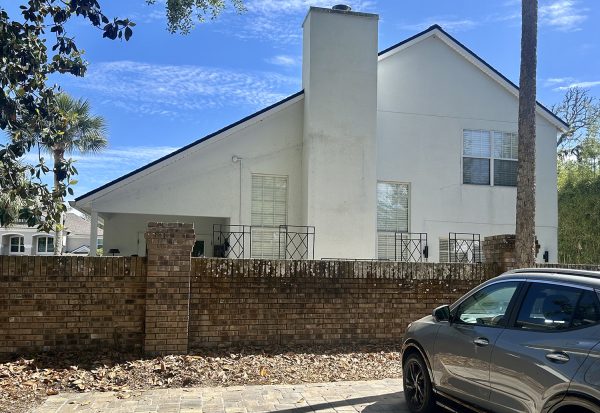
Three car courtyard entry garages are guilty of being site plan hogs by taking up much of the lot. Take this pink house for example:
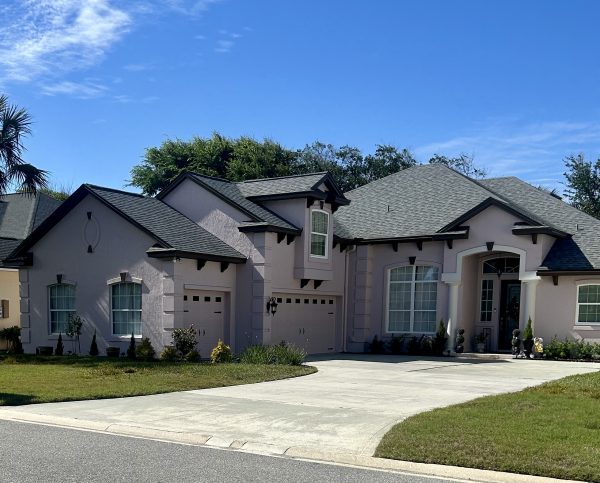
Great for storing cars, but in this case, it gobbled up the entire lot. And it gets worse.
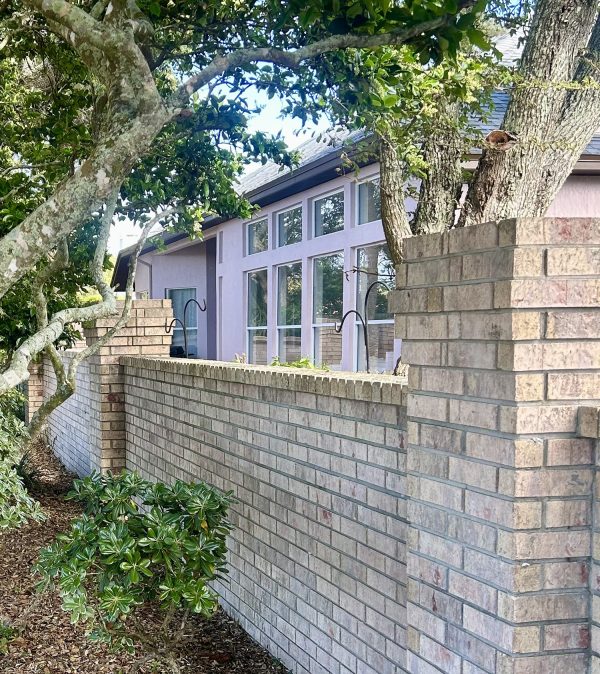
The tiny backyard faces a street with a very busy sidewalk. It is from that sidewalk that you can view their big screen TV inside the family room. There is a “privacy” fence along this street that offers no privacy. My picture doesn’t capture just how close the house is because I felt like a peeping Tom as I was taking the picture.
Front porches are another wonderful option that have the potential to ruin the backyard. Sadly, many communities measure the front setback to the forward most point on the house and not to the garage. So, adding a 6’ to 8’ deep front porch pushes the house further back on the lot. And while the house may technically “fit” within the setbacks, having a backyard that is 10’ just doesn’t give buyers many opportunities to add fun to their private space.
Garage Hand and Cul-de-sacs
Perhaps the most gruesome tale of lot fit issues was a project in the eighties where the houses were 50’ wide with a courtyard entry garage (or J swing). The garage sat 30’ in front of the main body of the house so cars swing into the garage. There was a presale on a cul-de-sac lot with the curve the cutout on the lefthand side.
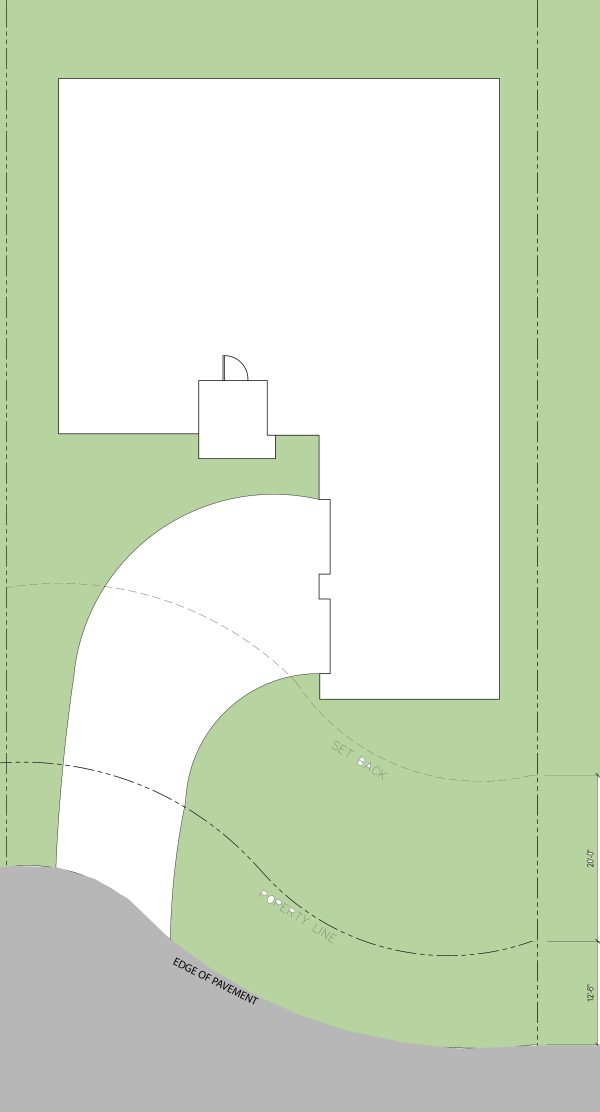
The buyer wanted the garage on the lefthand side of the home, so it didn’t block your view of the front door as you drove up. But when the site engineer issued the site plan, the garage was on the right side of the home. This was not acceptable to the buyer even though it would yield the biggest backyard.
When the buyer saw the corners of the home staked out, she called the construction office and asked for the home to be flipped. A young superintendent skipped getting a new site plan drawn up and simply flipped the house on the lot without pushing it back.
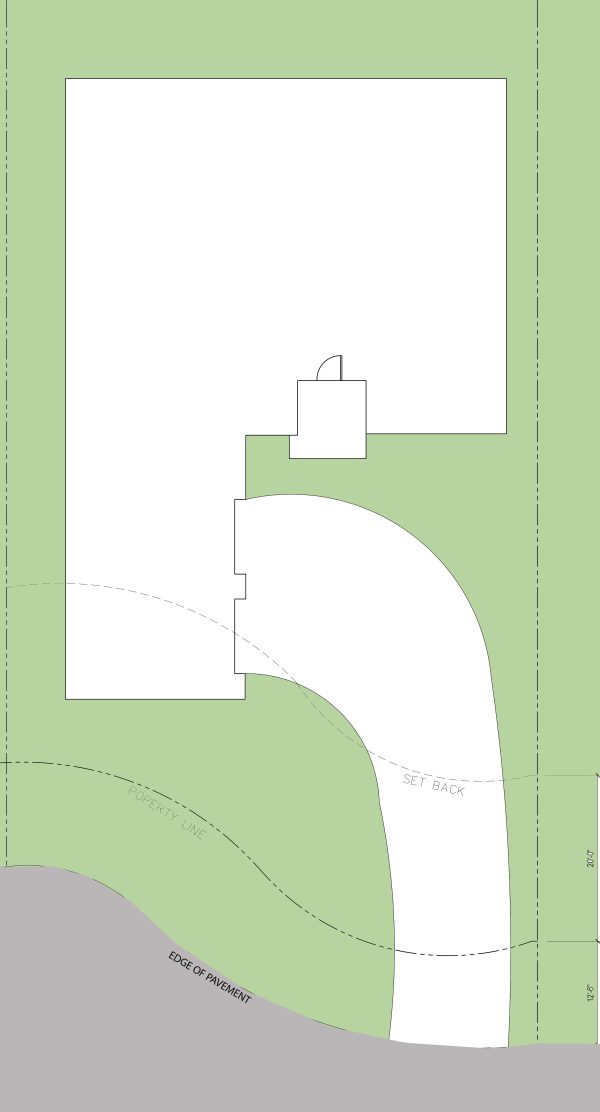
Now the garage which was 30’ forward of the home was on the shorter side of the lot. The garage was not only over the front setback, but also sat over the underground utility easement.
After the slab was poured, the young superintendent took out his tape measure and saw that the garage was more than 20’ off the curb. No problem. WRONG! That’s when he learned the curb was not the property line. Construction continued but when his boss return vacation, the house was fully framed. The “fix” was the remove the garage and design an alteration to get into the home from the righthand garage. WOW.
The Moral of the Story
They say pictures are worth a thousand words but not all buyers can “picture” how their house will sit on a lot even if they see a site plan. Communication between sales, land, and construction is critical to ensure buyers can design the backyards of their dreams.
Have you experienced any backyard disasters? I’d love to hear about them.
Categorized in: Uncategorized
This post was written by Housing Design Matters
 Privacy Policy