
March 23, 2026
Fancy Faucets and Elevated Kitchens
Someone once told me that faucets are the jewelry of our countertops. Like jewelry, faucets come in a variety of finishes including silver and gold tones along with a half dozen other colors. Faucets also come in a variety of styles from ornate to industrial chic.
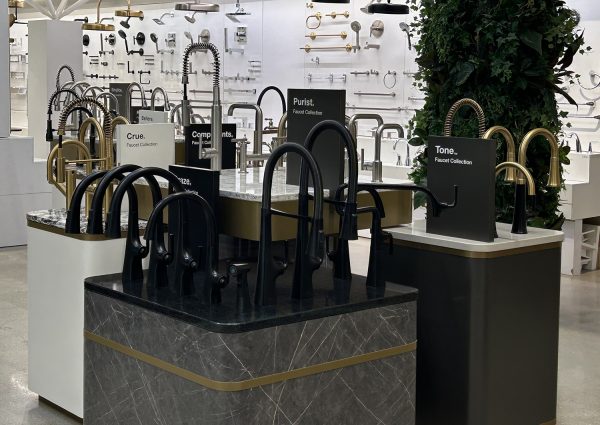
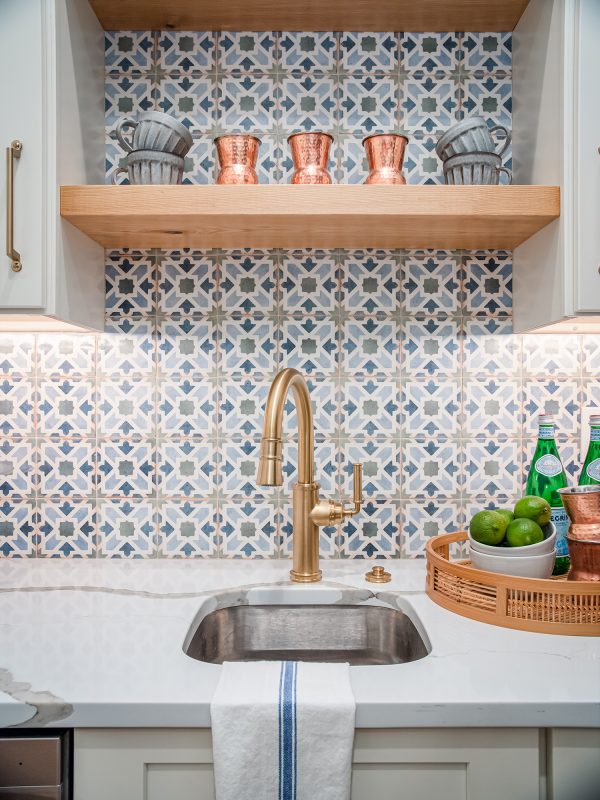
But faucets haven’t always been considered fancy works of art. My aunt had a house in Greenville with a separate facet for hot and cold water. I saw these same faucets at the Kohler museum from 1899.
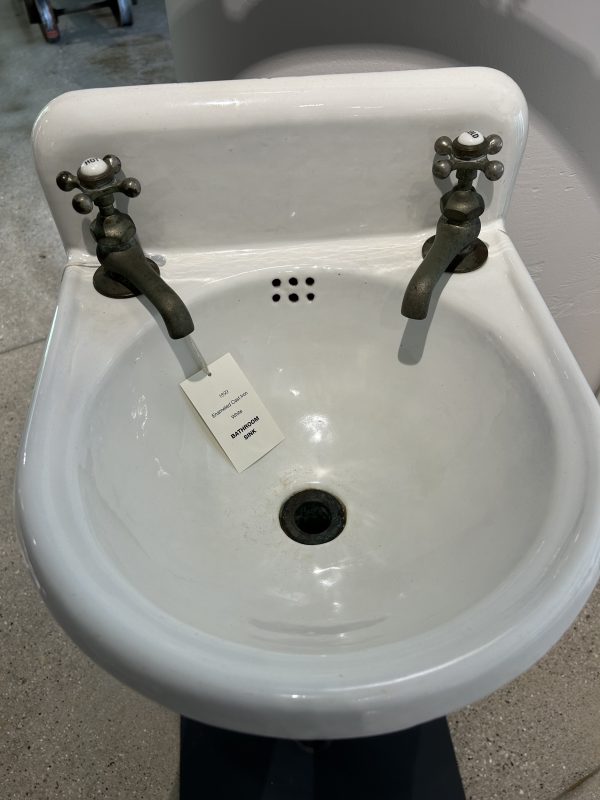
Can you imagine trying to wash your hands with those? You needed to capture the water in the basin to get the proper temperature. Probably used less water as a result.
Functional Faucets
Faucets have certainly gotten more sophisticated since that 1899 design. The first innovation was two handles but one spout so the water temperature could be mixed. Then came the idea of one handle and one spout – a concept we take for granted today. Indeed, today’s kitchen facets are multifunctional including the ability to swivel, pull down extension, and various spray options. Some even have a touchless on and off feature.
I remember when the spray feature was a separate hose to one side of the faucet. When there was water flowing through the faucet, you could pull out the hose, squeeze the trigger to activate the spray. Did anyone experience the practical joke of wrapping the spray trigger with a rubber band so when the faucet was turned on the water would unexpectedly spray whoever turned on the faucet?
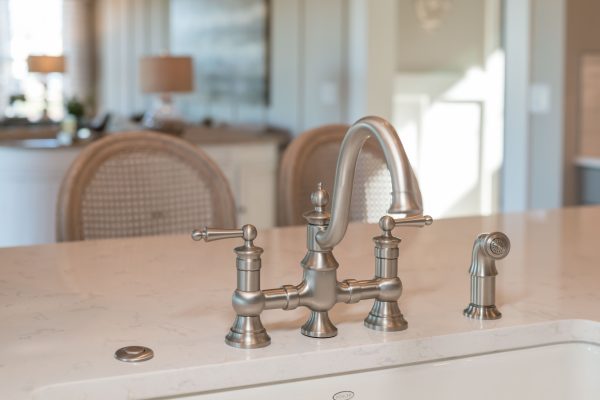
I personally am glad the spray is now within the faucet and not separate.
Utilitarian Kitchens
I also remember when kitchens were closed off, utilitarian spaces. With these kitchens, there was little value to a pretty faucet. In fact, many of the kitchens were pretty spartan. Often the only highlight was the window above the sink so the cook could look out at the world and wonder why they were stuck in this dreadful kitchen.
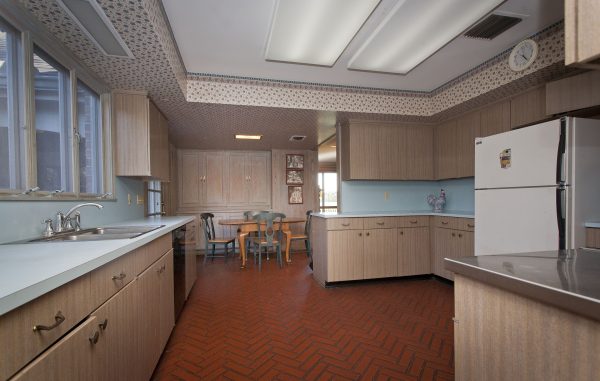
The Entertaining Kitchen
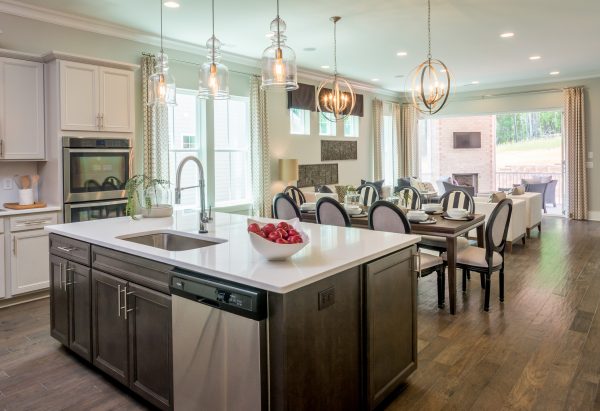
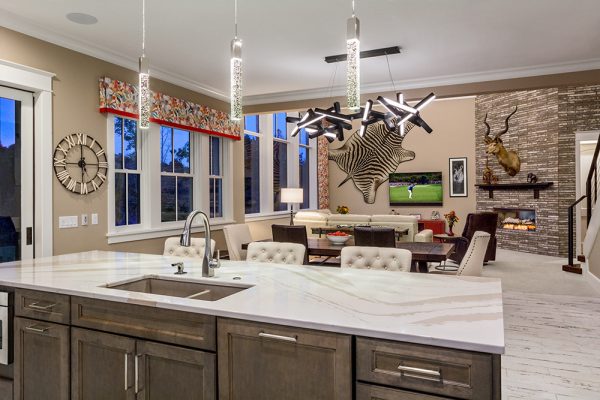
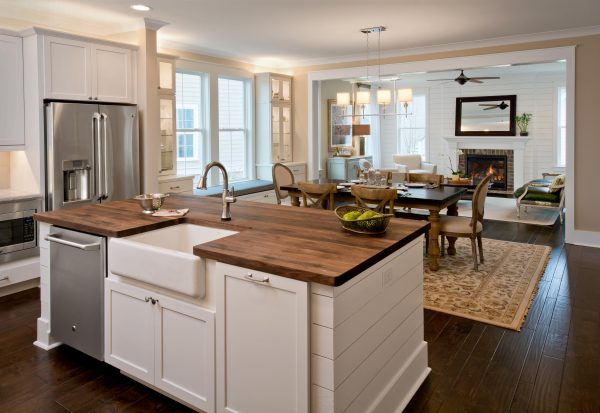
The big transition for kitchen designs began in the eighties and nineties along with the open floor plan. Kitchens turned into social spaces and the walls started to come down. First, the sink was placed on a peninsula facing outward. But these sinks weren’t completely exposed as they were surrounded by a 42” high wall. The thought was so guest couldn’t see dishes left in the sink. The faucets were also shielded from view.
Next came the sink in the island. The early edition of the free-standing island still included the 42” high wall shielding the sink and faucet from view.
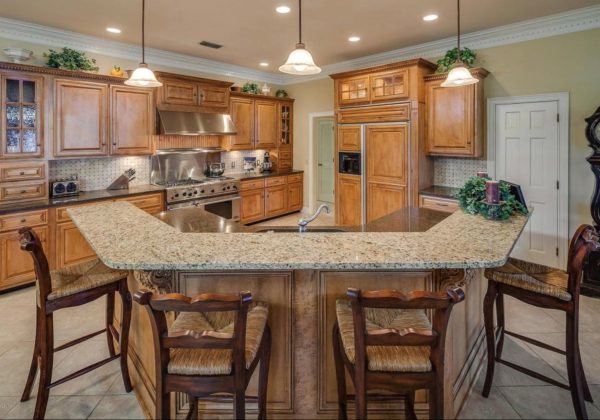
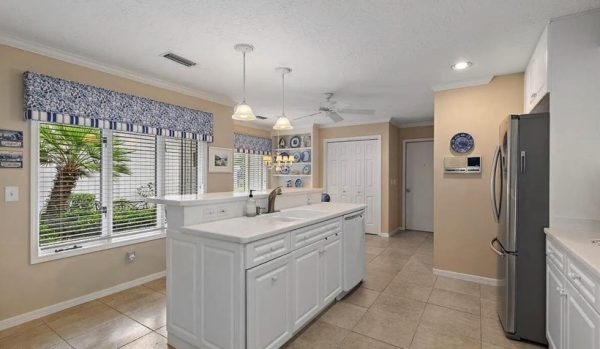
It wasn’t until the sink became one level that the faucet needed to look more presentable. Indeed – the concept of countertop jewelry took hold in a big way.
The Backsplash
But when the sink was under a window, behind the sink and below the window was a backsplash. Its function was to limit the splash of water. When there was a 42” high wall on the early islands, there was also a backsplash. Modern kitchens today still use the term backsplash, but these low maintenance finishes aren’t behind the sink.
The one negative of the single level island is that there is nothing to contain the water from behind the sink. Even a quick wash of your hands can distribute water everywhere around the sink. If there is enough water, it will eventually find its way off the island and onto the floor, bar stools, or anything in the water’s path.
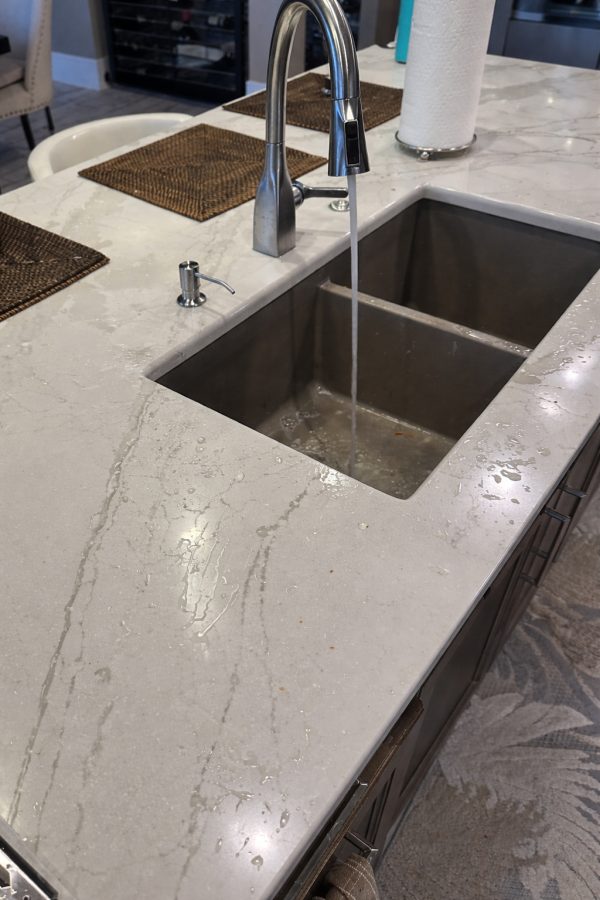
In my house, we call this excess splash of water the Shamu effect – named after the performing Orca whales at Sea World in Orlando and San Diego. We have vivid memories of sitting outside on a steamy hot summer day in Orlando and being completely drenched by the splash from the whale. After the initial shock of drenching, it was refreshing. Less so in the kitchen.
My New Faucet
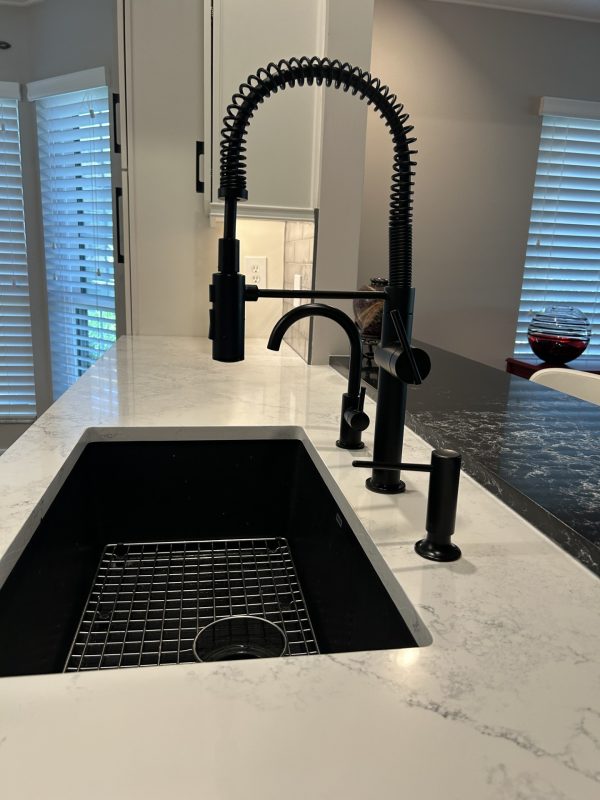
Our townhome came with a recently remodeled kitchen including a new, industrial chic faucet. It has all the expected features like the extendable spray. And because it is a black faucet on a white countertop, it is really eye catching. But unlike my previous island faucet, this one seems to limit the Shamu effect. Is it the distance away from the edge of the sink? Is it the depth of the sink? Maybe both? By happy coincidence, our countertop extension adds a one inch stop for what little water is splashed. It is truly delightful.
What is your favorite kitchen faucet feature, color, or design? Do you prefer classic, bold, industrial, or perhaps you value function above all else? I’d love to hear your thoughts.
Categorized in: KitchenDesign, Uncategorized
This post was written by Housing Design Matters
 Privacy Policy