
May 15, 2026
Taking the Dread out of the Basement Stairs
I love when I can take a high-end feature and apply it to production homes without being too expensive. I know. That sounds too good to be true. Let me explain.
Luxury Homes
Our summer home is in up state South Carolina. Many of the high-end homes in the area are built on lots sloping front to back. Because of the topography, many homes have a finished walk out basement. But wait! You can’t call it a basement if you’re charging over a million dollars! Words like terrace or lower level replace the term “basement”.
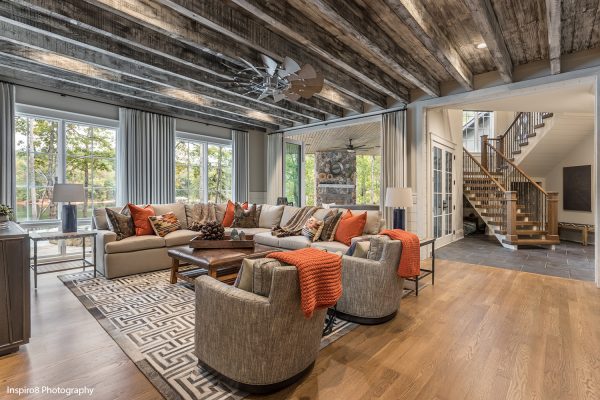
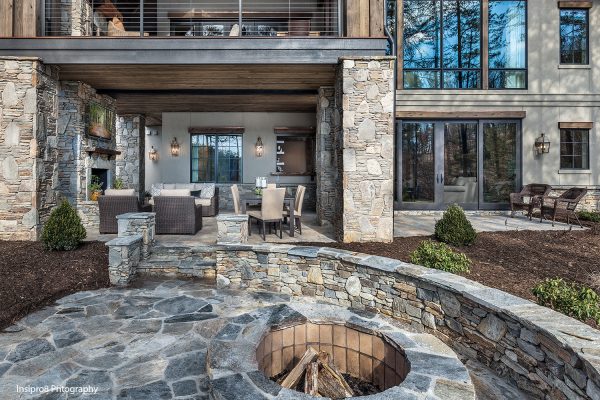
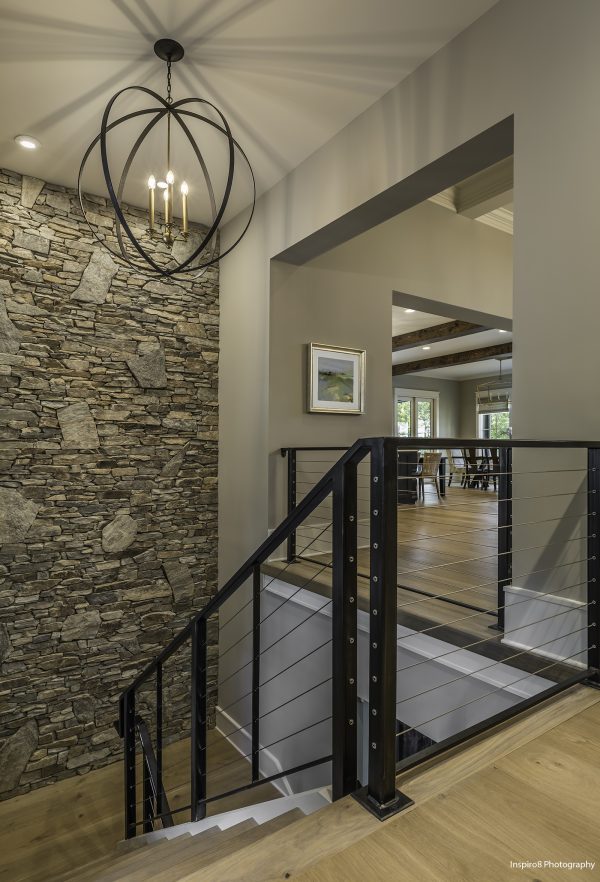
The key to making the lower level feel luxurious is how you get down there. To entice buyers down to experience the lower level, the stairs leading down are open to the main level with open handrail and ideally featuring a wonderful pendant light above.
Production Home
But what if you’re building a production home with an unfinished basement? You might typically build a closed in staircase with a door at the top.
My family had an old lake house in Wisconsin with an unfinished basement and a closed in stairs. Indeed, the stairs were dreadful. They were steep, narrow, and dark. They even had a couple of winder treads to make it downright dangerous. These stairs were the polar opposite from the luxury million dollar house stairs.
Unfinished Basement
Let’s examine the concept of a basement foundation. They are more expensive than a slab-on-grade foundation. In some regions of the country, unfinished basements are not only expected but also desirable despite the added cost. Hey, they’re great for placing the HVAC equipment and water heater. And talk about the storage opportunities! Perhaps this becomes an opportunity for a future game room or man cave.
Think Differently
But let’s talk about the stairs leading to the unfinished basement. If the basement is expensive and desirable, why hide it? Why have a dreadfully dark, steep, and narrow staircase leading to them?
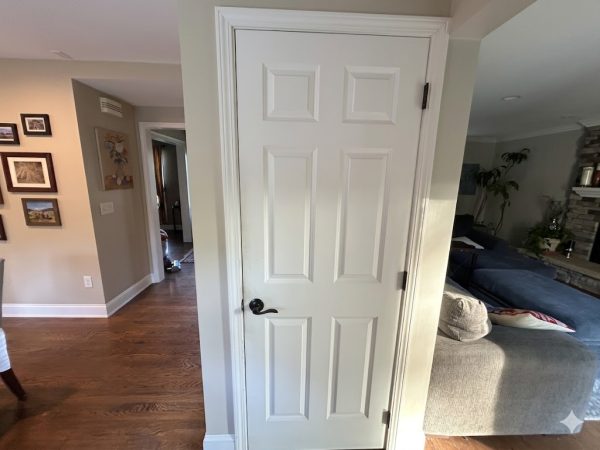
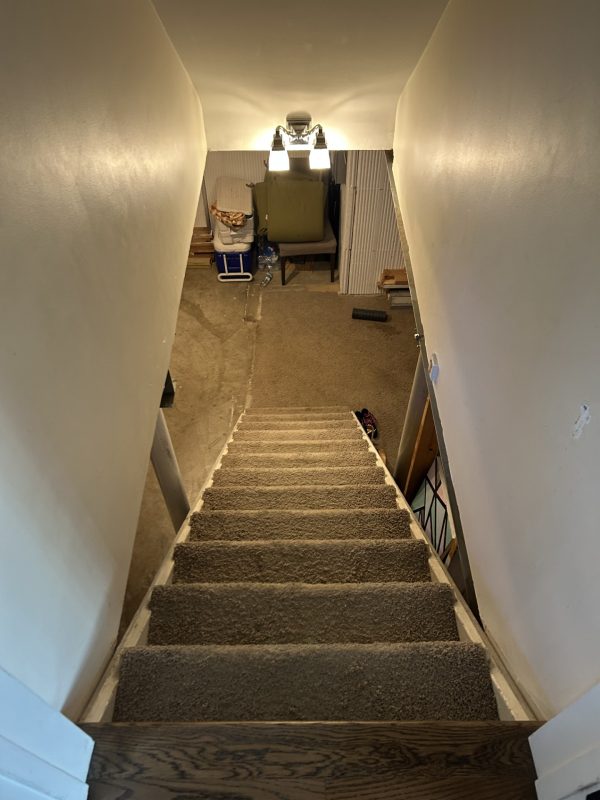
If a basement is an upgrade from a slab foundation, don’t we want to display this feature? “Oh, look honey, this one has a full basement!”
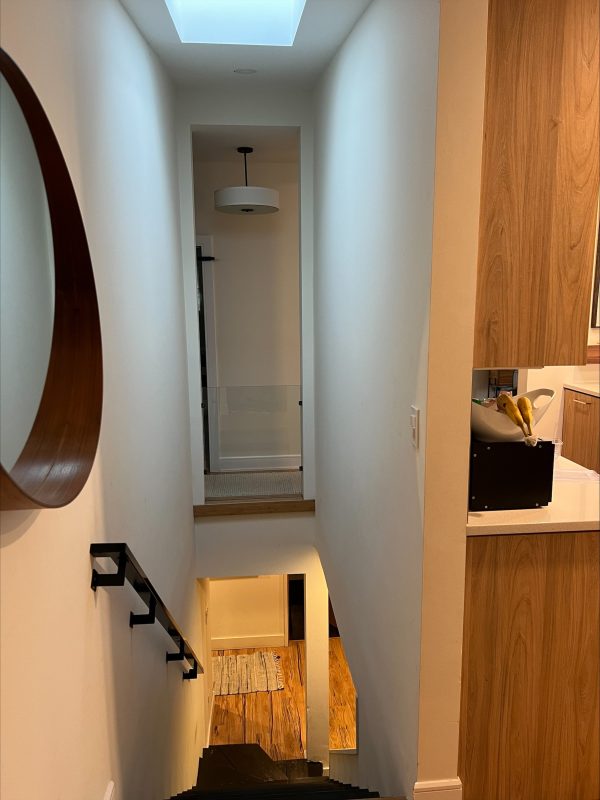
I love this particular basement stair, especially the peek-a-boo glass rail on the other side!
Move the Door to the Basement
Instead of having the door at the top of the stair, I advocate the door at the bottom of the stairs. This will not only immediately reveal that the home has a basement, but it will also make the main floor feel bigger.
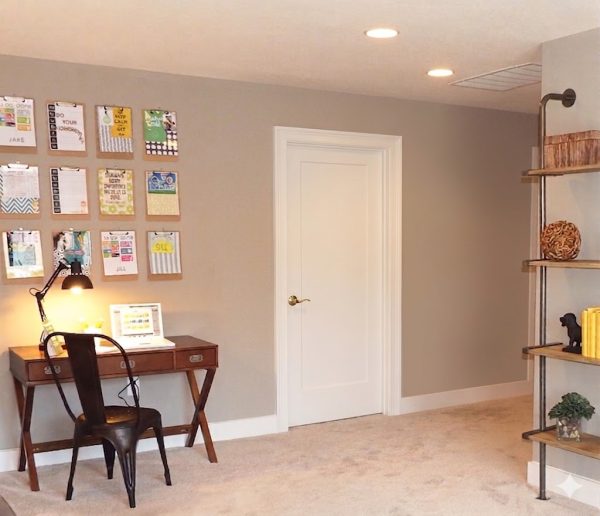
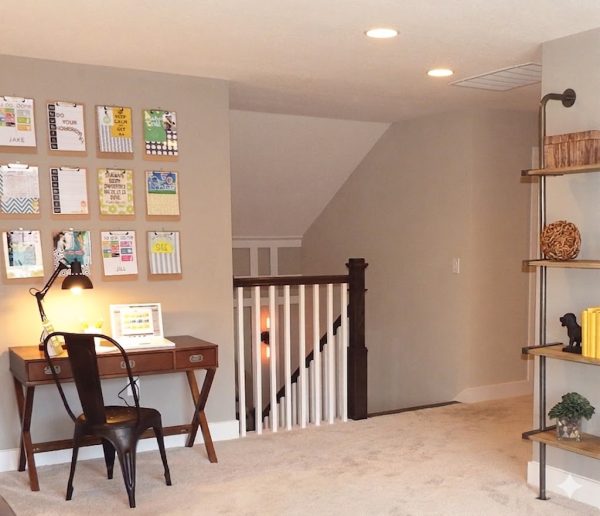
I can hear the argument now. “That’s not the way we do it. We would need to finish the stairs.” That tells me they are probably just built of pressure treated pine with a 2 x 4 for a handrail and unfinished walls. Yuck! Why not use luxury vinyl plank on the stairs? It’s durable and affordable to keep the cost down. The cost of drywall and vinyl for the stairs pales compared to the cost of the actual basement. It is the basement foundation that is expensive not the stairs.
Visually Expands the Main Floor
My final point for opening the stairs to the basement is how it improves the livability of the main floor – especially if the home isn’t large. A straight run stair left open to the living area visually expands the space by at least three and a half feet. So a 5’ wide foyer would live 8’-6” wide.
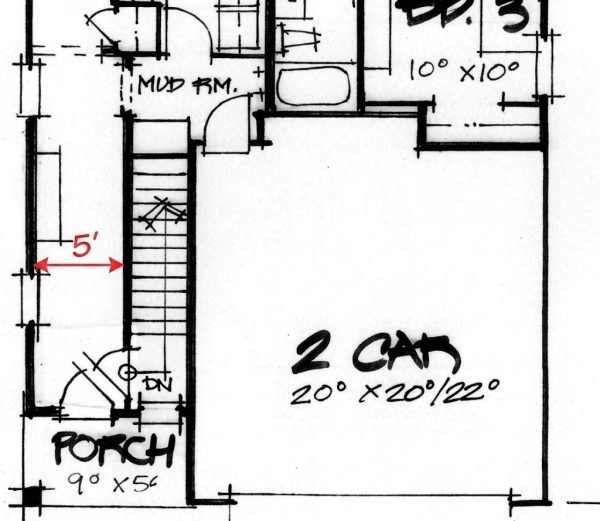
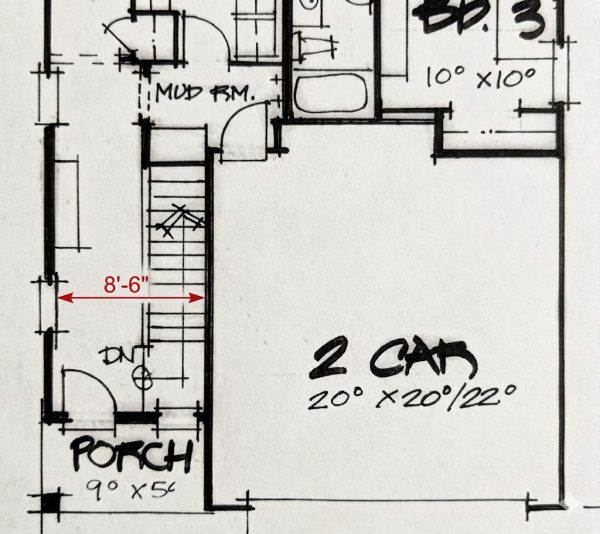
Wow. A switchback stair is even more impactful expanding the space as much as 10’!
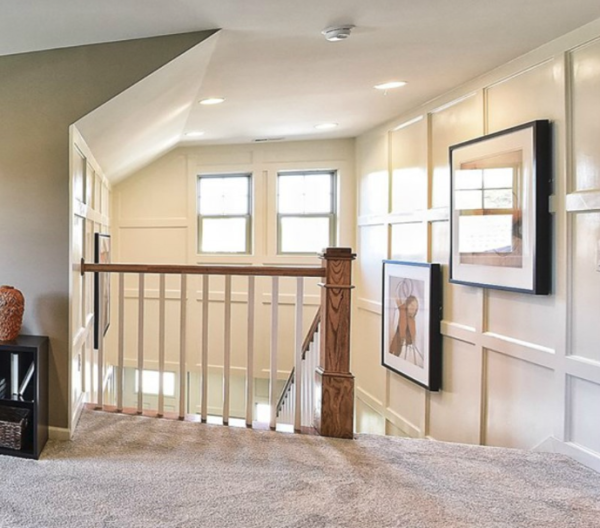
Half wall or Handrail
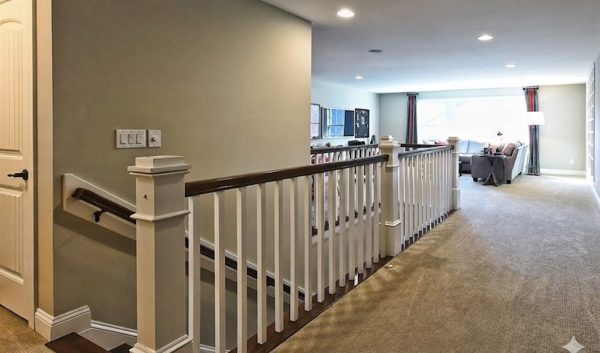
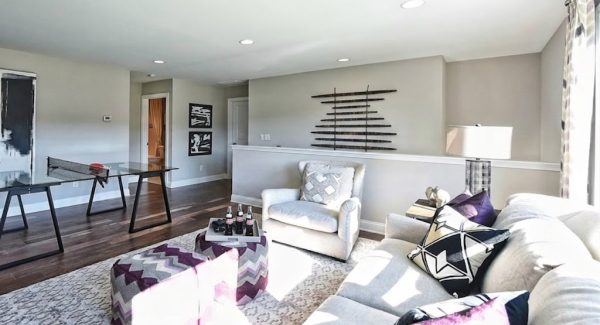
I know in this cost constrained housing environment, we are always looking for ways to save money. You could offer the open to the basement stairs with a half wall and offer a handrail as an upgrade. Naturally, showcasing the open handrail in the model is always recommended.
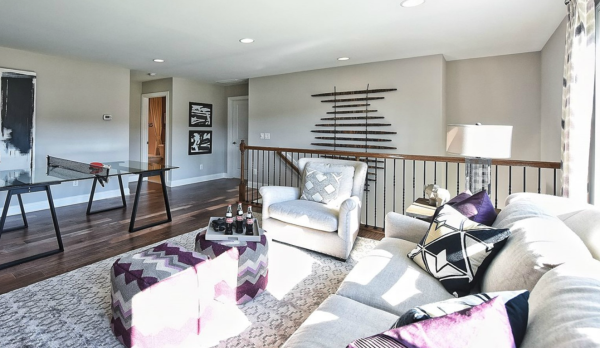
But even with a half wall, you will still see the entire width and length of the stairs.
You might be wondering why a crazy architect from Florida is telling northern builders how to build basement stairs. I argue that an outside perspective can sometimes see things in a whole new light. Hey – if you always to do what you’ve always done, you will get what you always got. In a challenging market this could be a way to differentiate from the “those track home builders.”
Agree? Disagree? I welcome your thoughts and rebuttals!
Categorized in: Uncategorized
This post was written by Housing Design Matters
 Privacy Policy